
Max Mostovetski, Piano
November 20th, 2026
The Programme
From Leipzig, and trained early at the “Johann Sebastian Bach” school, Max opens his concert with a Bach Partita and then follows it with a varied programme of Gershwin – 3 Preludes and Chopin’s 3rd Sonata. A glorious programme with something for everyone.
Concert Programme
Johann Sebastian Bach (1685-1750)
- Partita N.4 in D Major, BWV 828
- Ouvertüre
- Allemande
- Courante
- Aria
- Sarabande
- Menuet
- Gigue
Intermission - 20 minutes
Frédéric Chopin (1810-1849)
- Sonata N.3 in B flat Minor
- Allegro maestoso
- Scherzo, molto vivace
- Largo
- Finale, Presto ma non tanto, agitato
George Gershwin (1898-1937)
- Three Preludes
- Allegro ben ritmato e deciso
- Andante con moto
- Agitato
Programme Notes
It is a noteworthy fact that the music of Johann Sebastian Bach has remained a fundamental inspiration to many composers. He is a “once heard never forgotten” composer. To the performer he is an intellectual and technical challenge, resulting in the pleasure of performance. Chopin carried a copy of Bach’s “Well Tempered Clavier” with him on his visit to Majorca, with his mistress, Georges Sand. Bach was a composer and teacher. His Keyboard works were written for musical pleasure and instruction. His music broadened the horizons of tonality allowing music to be written in any of the major and minor keys.
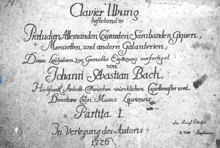
The 6 Keyboard Partitas are the last of the set of 3 Suites Bach composed. The other 2 were the so called English and French Suites. Composed between 1725 and 1730, the 6 Partitas were originally published separately but appeared in 1 volume in 1731. The form of the partitas was free ranging, opening with a large scale movement followed by various dance form.
Chopin composed 4 Sonatas in all. The 1st Piano Sonata is an early work, rarely performed; there follows a Sonata for Cello & Piano and 2 Piano Sonatas – in B flat minor and B. minor. The 3rd Piano Sonata is masterly and one the most difficult of Chopin’s piano works. It was completed in 1844 and published the following year. It follows what had become the standard 4 movement form for the Sonata, with the fast Scherzo movement following the opening. It is a wealth of technical pianisms and glorious melody – particularly in the 3rd, Largo movement. The Sonata concludes with a brilliant 12/8 Presto and a memorable theme.
George Gershwin’s 3 Preludes were first performed by the composer at the Roosevelt Hotel in 1926. Each piece is easily identifiable as an example of early 20th century American style. The composer originally planned a series of 24 Preludes called The Melting Pot. 7 were produced in manuscript but only 6 appeared in public performance. Of these only 3 were published. 2 of the remaining pieces were arranged for violin and piano and published under the title Short Story. The Preludes were dedicated to Gershwin’s friend and adviser Bill Daly. The music has appeared in various arrangements for solo instruments and ensemble and in 1992, used for a short ballet by Mark Morris. Later the ballet was dance by the great Mikhail Baryshnikov.
Programme Notes Copywrite Alistair Jones, 2026

The Artist
Max Mostovetski
Max Mostovetski was born in Leipzig, Germany, in 2001. He received his earliest musical inspirations from his mother, who is also a musician. Max began his piano studies at the age of five at the "Johann Sebastian Bach" Music School in Leipzig, where Kateryna Blyum, his teacher for 14 years, opened up the world of classical music to him.
During this period he performed in numerous concerts and participated in various competitions, such as the “National Bach Competition” in Köthen (first prize); the "Carl-Schroeder Piano Competition” (first prize); the “German National Youth Music Competition” in the chamber music category, in Hamburg (first prize); and the chamber music competition “enviaM” (second prize). He also successfully participated in the “Robert Schumann Youth Piano Competition” (third prize); the “Kiwanis Piano Competition” (first prize); "Zukunftsklang Award" (third prize); the "Euregio Piano Award" (special prize for the best interpretation of a classical sonata) and has been awarded multiple prizes from both the Chopin and the Mendelssohn Foundations in Leipzig.
Among Max's most notable achievements was taking first prize at the “Grotrian Steinweg International Piano Competition”, held in Braunschweig, first prize with the highest score at the “German National Youth Music Competition” in the category piano solo and second prize at the “International Carl Maria von Weber Piano Competition" in Dresden. He was also a finalist and Yamaha Prize winner at the "International J.S.Bach Competition" in Saarbrücken.
Max has additionally been a participant or semifinalist in several renowned international competitions abroad, including the "Maria Canals Piano Competition" in Barcelona, "Hastings International Piano Competition", "Santa Cecilia Piano Competition" in Porto and the "Ricard Viñes Piano Competition" in Lleida.
Besides participating in competitions, Max performs regularly in concerts throughout Austria, France, Germany, Great Britain, the Netherlands, Portugal and Spain. He was invited by the German television station "MDR" to appear as guest artist at the music festival “MDR-Music Summer” together with musicians from the MDR Symphony Orchestra. He has also performed with the Heidelberg Philharmonic Orchestra, Dresden University Orchestra, Gotha-Eisenach Philharmonic Orchestra, the Leipzig Youth Symphony Orchestra, and the Leipzig Youth Chamber Orchestra, with piano concertos from Bach, Mozart, Beethoven and Schumann. Max actively gives solo recitals and has performed in venues such as the Leipzig Gewandhaus, the Palace Schwetzingen, the Chemnitz Opera, the Tchaikovsky House in Hamburg, the Freiberg Cathedral, and the State Theatre of Braunschweig.
Max completed his secondary school studies at the “St. Thomas School, Leipzig”, where J.S. Bach had led the world-famous Thomanerchor. He studied at the University of Music “Franz Liszt" in Weimar with Prof. Grigory Gruzman, and since 2026 he has been pursuing a master’s degree at the University of Music in Lübeck with Prof. Florian Uhlig. He has attended various masterclasses and has received musical inspiration from notable contemporary musicians such as Arie Vardi, Bernd Goetzke, Boris Berman, Cyprien Katsaris, Dmitri Alexeev, Janina Fialkowska, Jacques Rouvier, Kevin Kenner, Michel Dalberto, Natalia Trull, and Anna Malikova.
Max was actively supported by the “German Chopin Society” (Deutsche Chopin Gesellschaft), the “Music Life Germany” Foundation (Deutsche Stiftung Musikleben), the “Jürgen Ponto Foundation for the Promotion of Young Artists” and the "PE-Foundation" (PE-Förderung) Mannheim.
He is currently pursuing a Master's degree in Musicology at the University of Leipzig.