
Mikhail Shilyaev - November 21st, 2025
The Programme
Mikhail is well known to our audience. His appearance here is the guarantee of a wonderful concert as he displays virtuosity with fine musicianship. His programme of Beethoven and Mozart includes Beethoven’s mighty Eroica Variations and the Sonata in A flat, Op.110 – a true musical feast.
Wolfgang Amadè Mozart (1756-1791)
Sonata in E flat Major, K282
- Adagio
- Minuetto 1, Minuetto2
- Allegro
Ludwig van Beethoven (1770-1827)
- Eroica Variations, Op.35
Interval (20 minutes)
Wolfgang Amadè Mozart
Sonata in F Major, K332
- Allegro
- Adagio
- Allegro assai
Ludwig van Beethove
Sonata in A flat Major, Op.110
- Moderato cantabile molto espressivo
- Allegro molto
- Adagio ma non troppo – Allegro ma non troppo
Programme Notes
This programme is beautifully planned; 2 major works by Beethoven, each with a Mozart “curtain raiser”. What could be better? While the Mozart Sonatas are lighter in character, they are still masterly in their musical content. The 2 Beethoven pieces show 2 sides to the composer’s personality. The Variations are light-hearted and even humorous, while the Opus 110 is one of the most important Sonatas ever created! A true Masterpiece full deep emotion and beauty.
When placing Mozart and Beethoven together, one should remember that the piano was still in its early development. The piano of Beethoven’s Op.110 is far removed from the lighter toned, gentler action of Mozart’s fortepiano. So, we must expect a very different music, while both composers are deeply expressive.
Mozart composed the E flat Sonata in 1774 during a visit to Munich, where his Opera La Finta Giardiniera was in rehearsal. Unusually, it starts with a beautiful slow movement, marked Adagio. The flowing right-hand melody is sent against a simple accompaniment. The 2nd movement is ABA in construction – Minuetto 1 and the Minuetto 2 followed by a repeat of the first. The 3rd movement is a brisk simple Allegro.
Beethoven’s Op.35, strictly should be titled, Variations and Fugue in E flat major – a real full-scale work. They became known as the “Eroica” Variations because they are composed upon the same bass figure used by Beethoven in the Finale of his “Eroica”, 3rd Symphony. It was a favourite theme of the composer, being used in his ballet music for “The Creatures of Prometheus” and in one of his set of 12 Contredanses. The bass line is a very simple one, but one that Beethoven uses with considerable ingenuity; it is clearly stated at the very opening.
Our 2nd Mozart Sonata does not follow the plan of the K282. We have a straightforward opening Allegro containing some dramatic moments, followed by a glorious Slow Adagio. A fast and brilliant finale in compound time ends the fitting “curtain up” to introduce Beethoven’s Sonata in A flat.
Beethoven’s final 3 Piano Sonatas, opus 109, 110 and 111, are a monumental achievement in piano composition. The Op.110 was composed in 1821 and published the following year. The opening movement is marked in “a moderate speed with great expression”. These last sonatas are littered with dynamic and expression markings. The 2nd movement is an Allegro Molto- very fast with off beat accents. 3rd movement is an extraordinary piece of writing.
Looking at the piano score, one can immediately see something remarkable. It begins with a piano Recitative, unique in keyboard expression. There are 6 tempo markings and a brief phrase thought to be fragment from Bach’s St. John Passion. This leads to the gentle and sad “Arioso” and then to the first of 2 fugues. The Arioso returns before the 2nd Fugue which builds to a thrilling, passionate conclusion.
Programme Notes Copywrite Alistair Jones, 2025
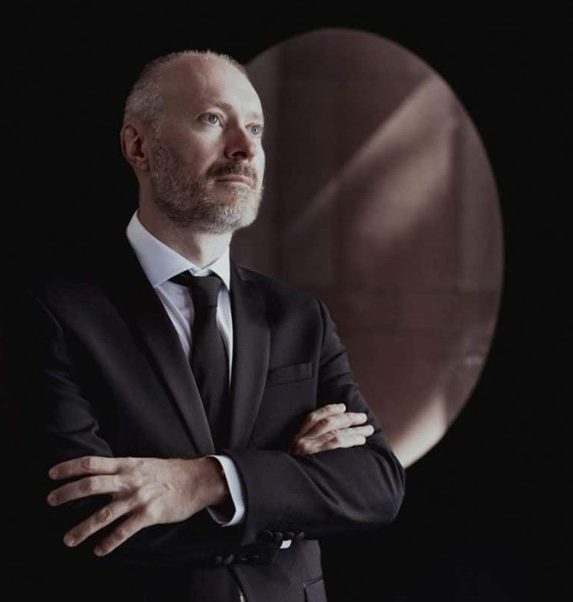
The Artist
Born in Russia, Mikhail Shilyaev started piano at six, winning several competitions at a young age. He is a graduate of Moscow Conservatoire where he studied with Olga Zhukova, Eliso Virsaladze and Mikhail Lidsky. Further studies included Munich Hochschule with Franz Massinger; Royal Northern College of Music with Mark Ray, Nelson Goerner and Alexander Melnikov; Trinity Laban Conservatoire in London with Deniz Gelenbe.
Supported by many awards, Mikhail is a prizewinner of many competitions, including the last Vianna da Motta Piano Competition in Lisbon. Mikhail has played throughout Europe in the most important venues including Wigmore Hall, Birmingham Symphony Hall, Bridgewater Hall in Manchester, Great Hall of the Moscow Conservatoire, Gulbenkian Centre in Lisbon.
He has performed as soloist with the London Soloist Chamber Orchestra, the London Musical Arts Orchestra and the Gulbenkian Symphony Orchestra among others.
Mikhail’s recent CD’s for Toccata Classics and for Stone Records were enthusiastically received by critics.